


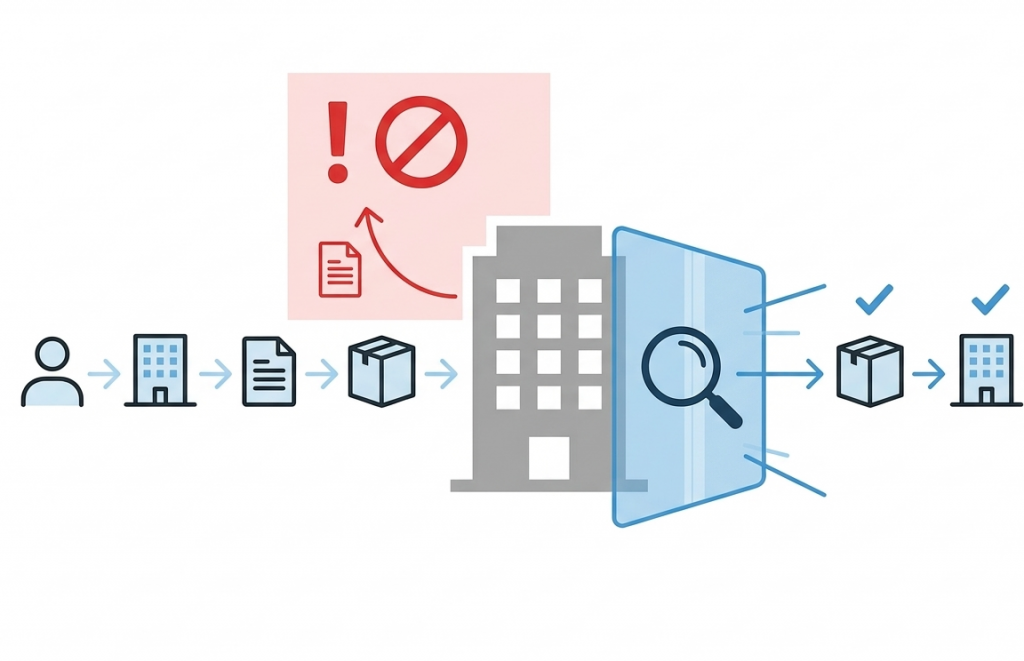
Sanctions list screening has gained new significance following the amendment to the Foreign Trade and Payments Act in Germany (Außenwirtschaftsgesetz, AWG) of 6 February 2026: it has become an indispensable compliance cornerstone for every company engaged in foreign trade. The tightening of criminal provisions, expanded organisational duties, and the mandatory screening of ultimate beneficial owners (UBOs) place firms under considerable pressure, rendering any laxity a perilous indulgence.
The Asset Freeze Prohibition: Core of Sanctions Law
The asset freeze prohibition lies at the heart of asset-based sanctions regimes. It forbids the provision of funds or economic resources to designated persons, groups, or entities. Far from limited to mere payment blocks, this prohibition encompasses any action conferring an economic benefit – from supplying everyday goods and services such as logistics or consultancy to extending credit, guarantees, or even leasing premises.
Even the preparation or approval of such transactions constitutes a breach; indirect benefits via third parties are equally caught. Economic resources thus span payments, goods deliveries, financial advantages, or technical services – a broad remit touching the entire value chain.
Legal Foundations and Sanctions Lists
Under EU law, key regulations include No. 881/2002 targeting Al-Qaida and ISIL, No. 2580/2001 on combating terrorism, and country-specific embargoes against Russia, Iran, or North Korea, each accompanied by annexes listing sanctioned parties. Domestically, § 6 AWG (individual intervention) empowers authorities to restrict specific transactions via administrative act. Extraterritorial lists such as the US-OFAC Consolidated Sanctions List (US-OFAC CSL) remain pertinent owing to their far-reaching effect.
Tougher Penalties under the 2026 AWG Amendment
Transposition of EU Directive 2024/1226 has starkly intensified sanctions enforcement: newly introduced § 18(1a) AWG criminalises breaches of individual interventions. Fines now reach into the millions, reckless conduct is punishable, and prior safe harbour periods – such as the 48-hour grace – have been scrapped. This ramps up pressure on businesses to demonstrate robust prevention systems and processes.
Screening Ultimate Beneficial Owners (UBOs)
A UBO, per § 3 of the German Money Laundering Act (Geldwäschegesetz, GwG), is a natural person holding more than 25 per cent of shares or voting rights, or exercising equivalent control – say, via veto powers or dominant influence. Screening is vital, as sanctions pierce corporate veils: dealings with an ostensibly clean entity are off-limits if a UBO is sanctioned. Database queries or direct enquiries to business partners facilitate identification.
Practical Implementation and Record-Keeping Duties
Firms must embed sanctions checks and money laundering risk assessments into their workflows: ahead of onboarding new partners, a full match of names, addresses, and UBOs precedes any contract. Ongoing due diligence covers existing contacts – mandatorily daily, given frequent list updates. Hits trigger immediate transaction freezes, clarification via BAFA or Bundesbank queries, and notification to the Central Sanctions Register (ZfS). Every step demands audit-proof documentation, retained for at least ten years.
Particularly delicate is vetting applicants and staff: the asset freeze applies here too, as salaries or benefits count as economic resources. Every hire risks unwittingly benefiting sanctioned individuals – be it in multinational teams, agency workers, researchers, or even students. The duty stems from § 18 AWG and EU measures; a match requires BAFA clearance for wage payments and may prompt employment law repercussions, though no automatic bar to hiring arises.
Risk mitigation hinges on Chinese walls: strict separation between HR (applicant and employee data) and operational business (clients, prospects, suppliers). This curbs data misuse, safeguards GDPR compliance, and ensures HR screenings do not mingle with other corporate data or processes. Automated tools with role-based access and segregated data pools render this feasible.
Risks and Proven Solutions
Breaches carry custodial sentences of up to ten years (§§ 17/18 AWG), crippling fines, and enduring reputational harm. Leading law firms thus advocate automated screening software. Bolstered by training and clear internal protocols, it forms a sturdy bulwark fulfilling organisational obligations.
Sanctions list screening is no longer optional but a legal imperative, rendered unavoidable by UBO checks and the sweeping asset freeze. Failure here imperils not just penalties, but a firm’s very survival.
How Can Trustnet.Trade Help
Trustnet.Trade helps you close critical sanctions compliance gaps by going far beyond basic name screening. With instant KYB and UBO checks, real-time monitoring, and global sanctions screening including AMS and PEP, Trustnet.Trade helps you identify indirect ownership risks. Its automated alerts, visual ownership mapping, and compliance widgets give you continuous monitoring and transparency. Combined with risk-based questionnaires, and whistleblower modules, it keeps companies of any size up to date with evolving regulations, preventing reputational and financial risks from escalating into significant problems.